──── BLOG |
What Is an MOA Animation, and Why Pharma Uses It
A mechanism of action animation is a 3D sequence that shows how a drug, a device or a biological process works at a scale no camera can reach. It is the piece a medical affairs team reaches for when the mechanism is the argument.
This guide covers what an MOA animation actually contains, why pharmaceutical companies keep commissioning them, what the alternatives are, and what decides whether one is worth building. The examples are projects from our own work, each linked so you can see the finished piece.
What a mechanism of action video contains
Underneath the rendering, an MOA animation is a sequence of states: where the molecule arrives, what it binds to, what changes as a result, and what the clinical consequence is. Everything else — camera, lighting, music — exists to make that sequence readable.
In practice a finished MOA has four parts: an establishing shot that tells you where you are in the body, the mechanism itself at the scale where it happens, a consequence shot that returns to the tissue or the patient, and a closing frame that carries the claim. In the animation we built for Laboratorios Salvat to present UVESOL at CPHI 2023, that whole arc had to survive being watched standing up at a stand.
Why pharmaceutical companies keep commissioning them
Because a mechanism is the one part of a product story that a competitor cannot copy and a slide cannot carry. A physician decides on efficacy and safety, but they remember the mechanism, and the mechanism is what they repeat to a colleague.
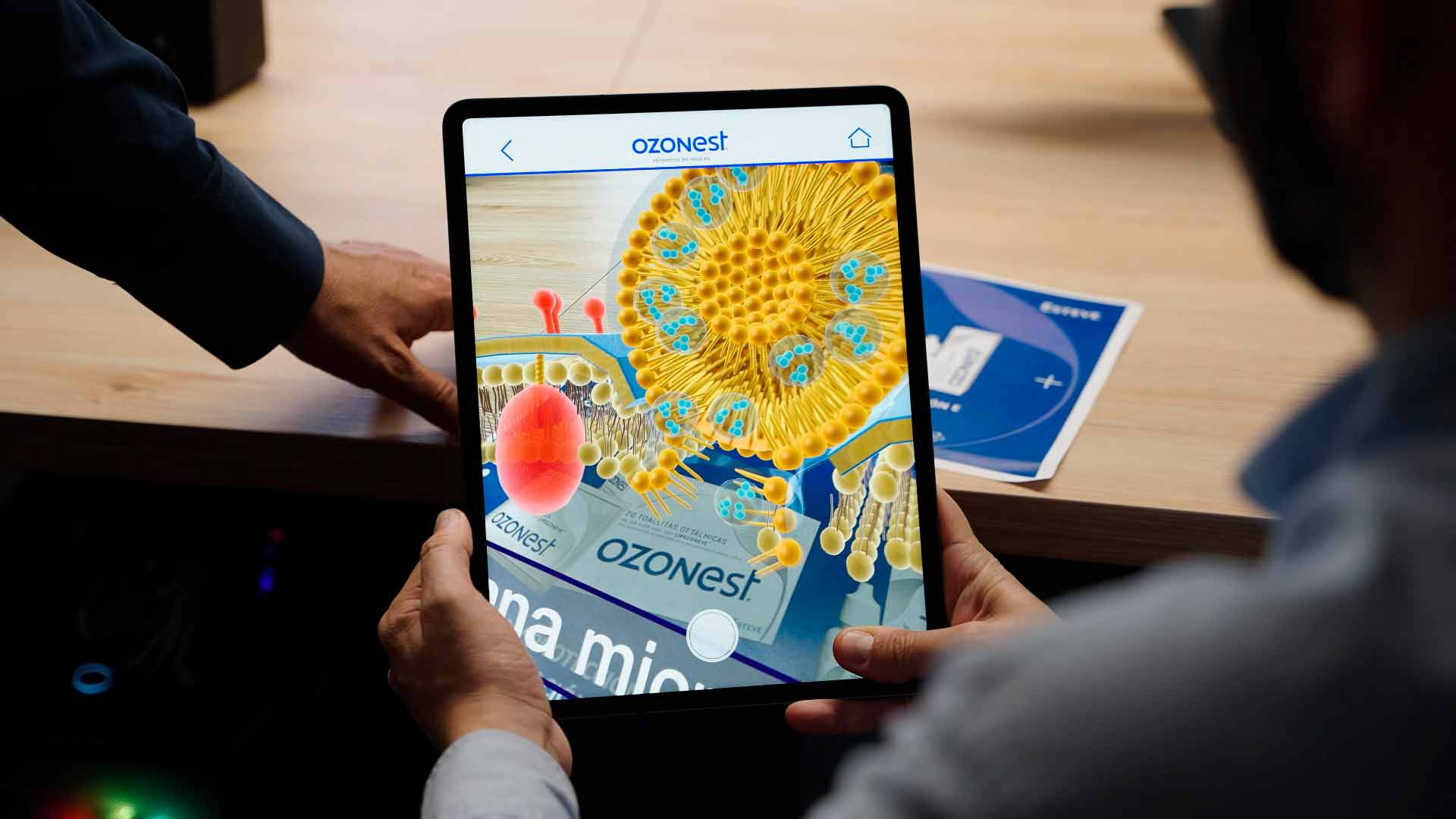
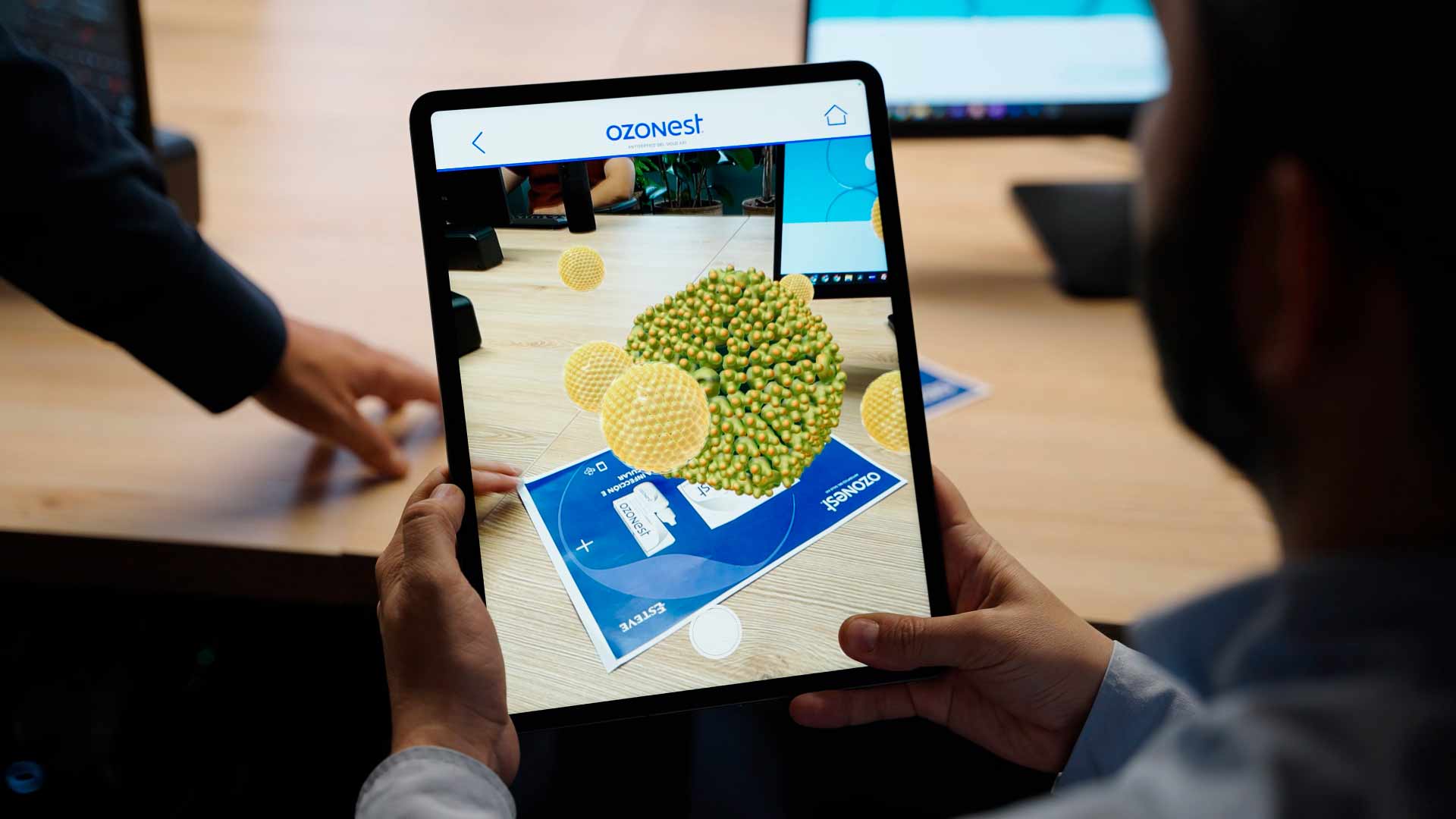
There is a second, duller reason: reuse. The same build serves a congress stand, a rep’s tablet, a training module and a web page. For Novartis we took the mechanism of psoriasis into augmented reality, so that the same science works in front of a dermatologist rather than only on a screen; for Esteve, the Ozonest mechanism travels in the delegate’s hand.
MOA animation, MOA video, MOA diagram: what the words mean
The terms get used interchangeably and they are not the same thing. An MOA diagram is a static figure: cheap, printable, and fine when the mechanism is a single step. An MOA video is any filmed or animated piece that explains the mechanism. An MOA animation is specifically the 3D build.
The decision between them is about motion. If what you are explaining changes over time — a cascade, a release, a binding event with a before and an after — a diagram will always need a caption to carry the part it cannot show. If it does not, the diagram wins on cost and on how easily it travels. We wrote that comparison out in MOA video vs. static diagram.

When an MOA animation is the right call, and when it is not
It is the right call when the mechanism is genuinely hard to picture, when the audience is scientific enough to care about accuracy, and when the piece will be used more than once. Those three together are what justify the modelling.
It is the wrong call when the product story is about convenience, price or service rather than biology; when the mechanism is one step that a diagram shows faster; or when there is no one on your side available to review the science. That last one sinks more projects than budget does: an MOA that nobody qualified has signed off is not usable in a regulated market.
What the schedule actually looks like
The part that takes longest is not rendering. It is agreeing what the animation claims. A first pass fixes the sequence of events in writing, a storyboard fixes the shots, and only then does the modelling start.
Review is the variable. Scientific and regulatory review happens at the storyboard stage and again before the final render, and each round has to be built into the plan rather than discovered at the end. When a project slips, it is almost always because review was treated as an approval step instead of as part of the production.

MORE GUIDES

VR for Pain Management: How It Is Used and What It Takes to Build
What Is VR Therapy? Uses, Limits and How One Is Built
3D Body and Face Scanning for Medical Projects: When It Is Worth It
Digital Human and Avatar Technology: How One Is Actually Built
What Is a Digital Human? Uses in Healthcare and Pharma
Virtual Reality in Psychology: What Is Used and What It Takes to Build
What Is a Virtual Patient? Uses in Medical Training
Scientific Infographic Examples for Research and Pharma

Augmented Reality in Surgery: Use Cases Today

VR Surgical Training: How It Works and What It Costs
Contact
Contact Us
Contact
Contact Us
Boston, Massachusetts, USA
T: (+1) 617 351 8477
M: (+1) 484 473 1704
info@pixel-medical-animation.com
Business Hours:
Mon-Fri: 9am-6pm (local time)
How can we help you?

SERVICES
- Medical 3D Animation in Boston
- Medical 3D Animation in Miami
- Medical 3D Animation in Los Angeles
- Medical 3D Animation in Minneapolis
- Medical 3D Animation in New York
- Medical 3D Animation in Raleigh Durham
- Medical 3D Animation in Chicago
- Medical 3D Animation in Texas
- Medical 3D Animation in Seattle
- Medical 3D Animation in Washington DC