──── BLOG |
3D body and face scanning for medical projects: when it is worth it
Scanning turns something real into geometry. It is the fastest route from a physical object — or a person — to a 3D model that behaves correctly on screen.
Most of what is written about body scanning is about fitness and fashion. This guide is about the medical side: what a scan actually gives you, what it does not, the consent it requires when the subject is a person, and when modelling from photographs beats scanning outright.
What a scan gives you, and what it does not
A scan gives you proportion and likeness: the real shape, at the real scale, without a modeller interpreting a photograph.
What it does not give you is a usable asset. Raw scan data is heavy, noisy and has no structure — no clean topology, no skeleton, no controls. Turning it into something that can be posed, animated or run in real time is retopology and rigging, and that work is normally larger than the scanning session itself.
This is the single most common misunderstanding in a scanning brief: the scan is the start of the model, not the model.

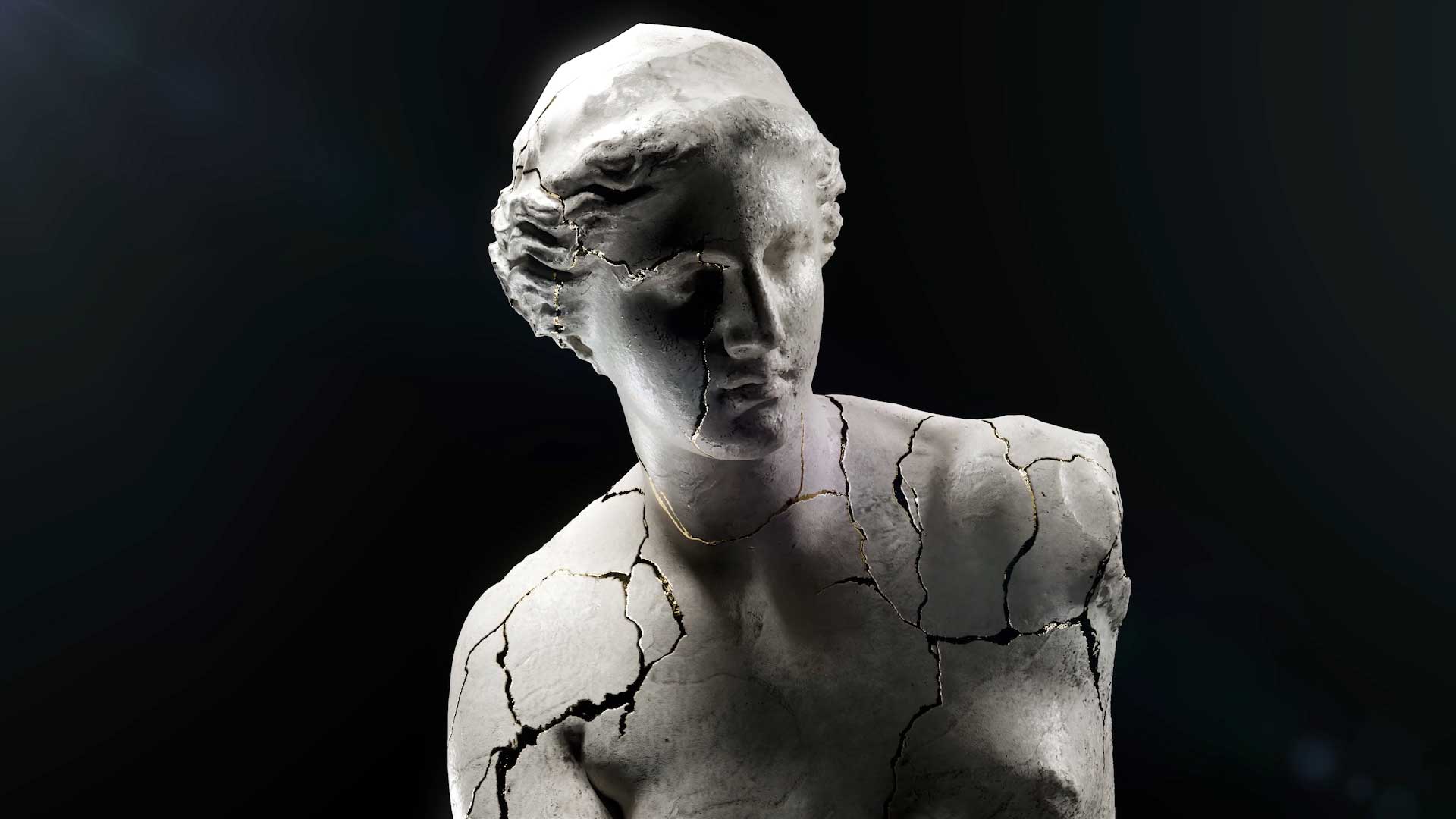
Body, face and object: three different jobs
Face scanning is the most demanding, because faces are what people judge hardest and because expression — not shape — is what makes a face read as alive. A scan captures one expression; everything else is built afterwards.
Body scanning is more forgiving on detail and more demanding on pose: a subject scanned in an awkward stance carries that stance into every animation.
Object scanning is the one we do routinely. We model products and equipment from photographs and photogrammetry data, which is scanning by another name: many images of a real object turned into geometry.
When the subject is a person
Then it stops being a technical question. A scan of someone’s face is their likeness, and using it needs written consent that covers the actual use — which markets, which channels, for how long, and whether the likeness may be animated saying things the person never said.
In health there is a second layer: a real patient’s face in a disease campaign is identifiable information about their condition. That is exactly why generated faces exist. For Evidenze and BioCryst we generated the patient imagery for a travelling exhibition on hereditary angioedema, so the testimonies could be told without exposing the people telling them.


When photographs beat scanning
When the subject is an object with clean geometry. A device is often faster to model from drawings and photographs than to scan, clean and rebuild.
When the figure does not have to be anybody. If the digital human only has to be credible, not recognisable, building from scratch skips scanning, consent and cleanup in one move.
And when the piece is a linear animation. Scanning buys accuracy you will not see in a shot that lasts four seconds.
What to settle before booking a session
What the model is for. A still render, a real-time avatar and a VR experience have different requirements, and the cleanup is scoped from that.
Which expressions and poses. They are decided in advance, because a second session later costs more than a longer first one.
The consent, in writing. Before anything is captured, not after.
Who owns the result. The raw data, the cleaned model and the rig are three different deliverables, and contracts often name only one.

MORE GUIDES

VR for Pain Management: How It Is Used and What It Takes to Build
What Is VR Therapy? Uses, Limits and How One Is Built
Digital Human and Avatar Technology: How One Is Actually Built
What Is a Digital Human? Uses in Healthcare and Pharma
Virtual Reality in Psychology: What Is Used and What It Takes to Build
What Is a Virtual Patient? Uses in Medical Training
Scientific Infographic Examples for Research and Pharma

Augmented Reality in Surgery: Use Cases Today

VR Surgical Training: How It Works and What It Costs

Virtual Reality in Surgery: Training, Planning and the Future
Contact
Contact Us
Contact
Contact Us
Boston, Massachusetts, USA
T: (+1) 617 351 8477
M: (+1) 484 473 1704
info@pixel-medical-animation.com
Business Hours:
Mon-Fri: 9am-6pm (local time)
How can we help you?

SERVICES
- Medical 3D Animation in Boston
- Medical 3D Animation in Miami
- Medical 3D Animation in Los Angeles
- Medical 3D Animation in Minneapolis
- Medical 3D Animation in New York
- Medical 3D Animation in Raleigh Durham
- Medical 3D Animation in Chicago
- Medical 3D Animation in Texas
- Medical 3D Animation in Seattle
- Medical 3D Animation in Washington DC