












ABOUT THE SERVICE
Augmented Reality for Healthcare
and Pharma
We develop innovative augmented and mixed reality experiences
designed for healthcare, pharma and medical communication.
Augmented reality in healthcare, pharma and medical training is transforming how the healthcare industry communicates innovation, knowledge and technology.
This immersive technology overlays interactive 3D models onto the real world, allowing professionals to better understand medical procedures, mechanisms of drug action and device functionality. Its applications span healthcare education, simulation, scientific communication and pharmaceutical marketing.
Augmented reality healthcare applications improve comprehension of complex medical concepts and amplify visual impact at trade fairs, congresses and clinical environments.
They also turn scientific information into engaging, memorable experiences that strengthen trust in treatments and reinforce brand innovation.
APPLICATIONS OF AUGMENTED REALITY IN HEALTHCARE
Simulation of medical procedures
Augmented reality medical simulation enables realistic recreation of interventions or treatments within mixed environments. Ideal for medical education, clinical communication and demonstrations of surgical techniques.
Presentation of medical and pharmaceutical devices
With medical device augmented reality, healthcare professionals can display drugs or equipment at real scale without transportation. They can interact with 3D models and visualize functionality in full precision.
Training and remote technical assistance
Augmented reality for medical training facilitates staff education and technical support remotely, providing real-time visual guidance that minimizes errors and downtime.
Immersive experiences for healthcare marketing and events
At congresses, fairs or presentations, augmented and virtual reality in healthcare creates a striking “wow effect” that draws attention and helps brands stand out within the healthcare and pharma markets.
Hospital space planning
Augmented reality lets you place a device at real scale inside the space where it would go — an operating theatre, a changing room, a corridor — and check distances, accessibility and circulation before installing it. All from a tablet, without moving a single machine.
Augmented reality on print and email
A printed marker or a QR code turns a book, a leaflet or a newsletter into a three-dimensional experience. It runs in the browser, with nothing for the recipient to install.
WHO NEEDS AUGMENTED REALITY HEALTHCARE SOLUTIONS?

Hospitals and clinics
To visualize treatments, procedures or surgeries in a more didactic and interactive way — for both professionals and patients.

Pharmaceutical laboratories
To demonstrate drug mechanisms of action or simulate their effects within the body during presentations, fairs or product launches.

Universities and research centers
To improve teaching and scientific dissemination through interactive experiences and medical augmented reality education tools.

Biotechnology companies
To communicate innovation, laboratory processes and technologies visually and dynamically, boosting engagement among investors or partners.
EVIDENCE OF OUR IMPACT
+25
years of experience
+1500
completed projects
+100
clients served
What is medical augmented reality, and when do you need it?
Augmented reality overlays interactive 3D models onto the user’s real surroundings through a phone, a tablet or a headset. Unlike virtual reality, the user is not cut off from what is in front of them: they still see their desk, their consulting room or their stand, and the device, the molecule or the anatomy appears on top of it.
When it pays off
When what you need to explain does not fit in a photograph and cannot be carried around: a two-metre laboratory system, a drug’s mechanism of action at molecular scale, or how a machine fits into a space that does not exist yet.
When it does not
If a linear video gets the message across, a video is cheaper and reaches more people. Augmented reality earns its place when the value is in the user handling, rotating and measuring for themselves.
BENEFITS OF AUGMENTED REALITY FOR HEALTHCARE
Visual impact at fairs and congresses
Interactive augmented reality experiences capture audience attention and improve the retention of scientific information.
Clear explanation of products and treatments
Augmented reality healthcare applications allow 3D visualization of how drugs or medical devices work, improving understanding and communication impact.
Reduced logistics costs and safer demonstrations
By replacing physical equipment with real-scale digital replicas, augmented reality in healthcare eliminates transport costs and risks.
Optimization of healthcare education and training
Professionals can practice procedures in virtual environments, receiving precise and safe guidance from anywhere.
Innovation and brand differentiation
Integrating augmented reality in healthcare strengthens the perception of modernity, innovation and technological leadership in the healthcare and pharma industries.
Why Choose Us for Your Augmented Reality Project
Scientifically Accurate, Reviewed by Experts
Your R&D and medical-affairs teams won’t have to fix our science. We build every project on your data and source material, review it with specialists, and represent mechanisms and anatomy faithfully, down to the molecular detail.
25+ Years of Experience with Leading Pharma & Medtech
We’ve delivered work for Hipra, Grifols, Salvat, AstraZeneca, Pfizer, Zeiss, Abbott, Medtronic, and Novartis, among others. Three decades inside the medical field means we already speak your language, clinical, regulatory, and commercial.
Full-Service, In-House Team, From Concept to Delivery
Concept, scientific design, 3D animation, programming, and final delivery all happen with one team. You brief once, coordinate one partner, and receive every format you need.
AUGMENTED REALITY FOR PHARMA
A mechanism of action in the room
Our AR work for Esteve Ozonest and Novartis puts the mechanism where the physician is standing, instead of on a screen behind them.
A stand people stop at
Fresenius Kabi and Hartmann: augmented reality turns a corridor at a congress into a conversation that starts from what the visitor just did.
Training where the equipment is not
Werfen: augmented reality for medical training simulation, for when the real machine cannot travel to the room.
AUGMENTED REALITY FOR HEALTHCARE SPECIALTIES
Augmented reality combines the real environment with interactive 3D models that facilitate understanding of organs, treatments and biological processes, bringing precision and a new way to communicate science within healthcare.

Anatomy
We recreate human anatomical structures with visual precision and medical rigor, supporting teaching, outreach and clinical practice.

Genetics
We represent mutations, genetic inheritance and gene editing, helping to understand how genetic information influences health and personalized medicine.

Immunology
We illustrate how the immune system works and how the body responds to viruses, bacteria or vaccines, facilitating scientific and medical communication.

Biotechnology
We showcase biotech applications and genetic engineering processes, from cellular manipulation to the creation of new drugs or biological materials.

Oncology
We represent tumor development and the action of oncology therapies, visually explaining research and advances in cancer treatment.

Cardiology
We animate the functioning of the heart and circulatory system, showing pathologies, surgeries and the effects of cardiovascular treatments.

Neuroscience
We visualize the brain and nervous system in action, from neuronal transmission to the effects of drugs or neurological therapies.

Medical devices
We create animations that show in detail how medical equipment, prostheses and advanced healthcare technologies work — both internal and external.
OUR AUGMENTED REALITY HEALTHCARE PROJECTS
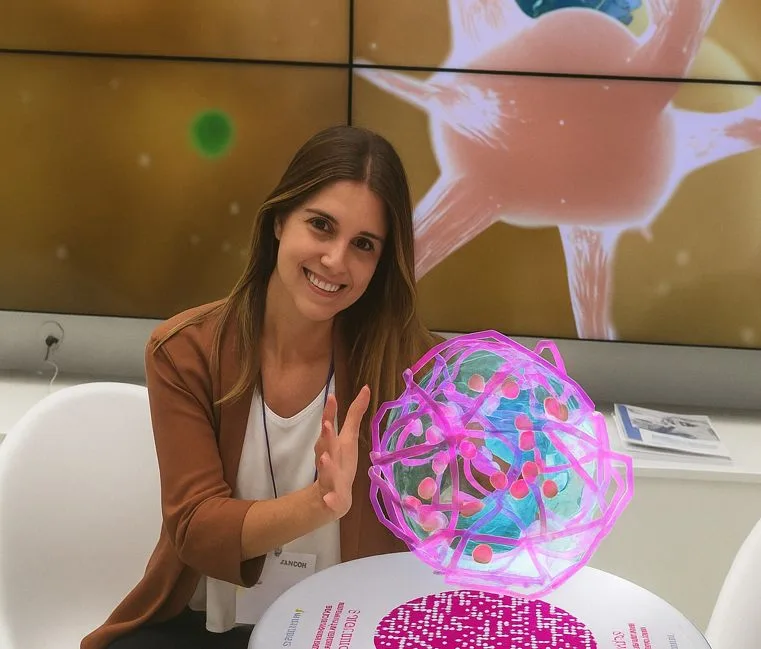
Novartis | Photocall Psoriasis
Virtual AR photo call showcasing the mechanism of action of secukinumab at healthcare congresses on psoriasis.
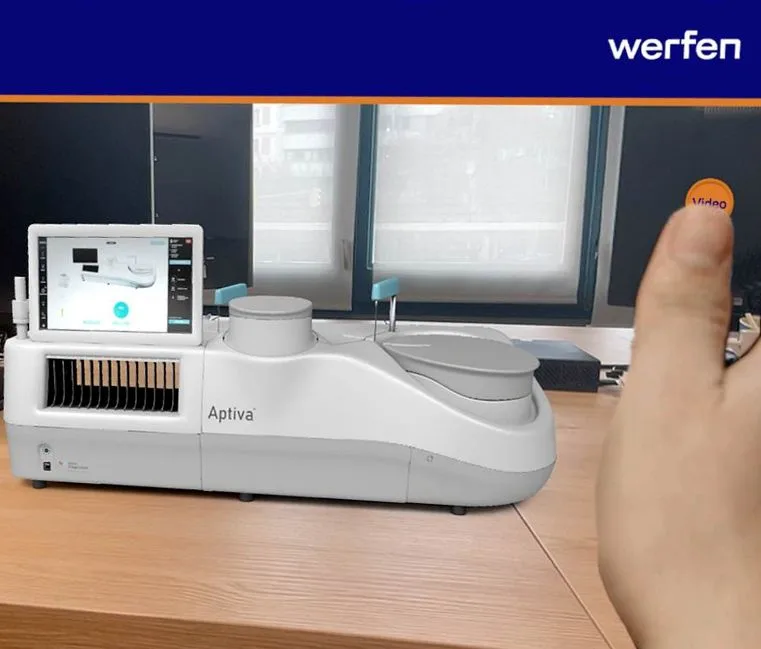
Werfen | Gamified learning
AR training app for clinical case simulation and interactive medical education.
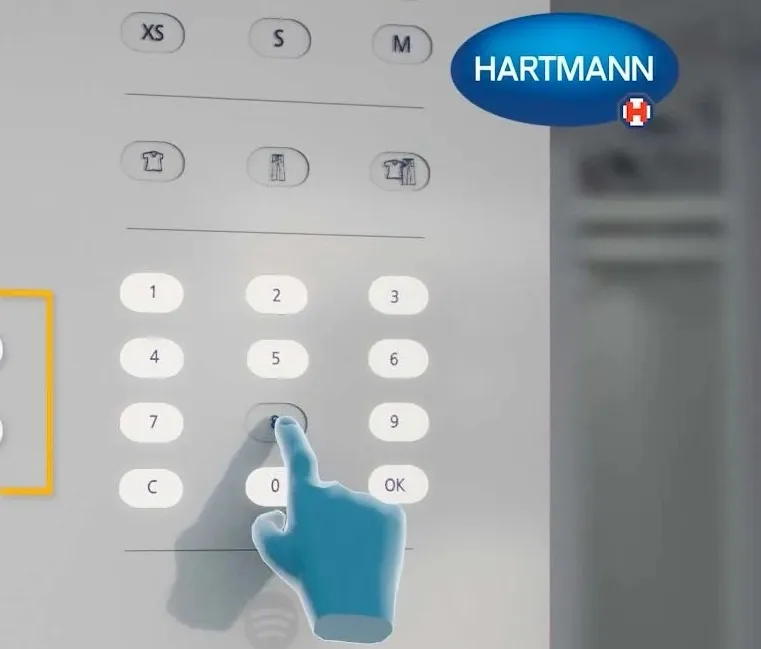
Hartmann | AR catalog for medical representatives
Augmented reality sales tool that allows real-scale visualization of medical devices and 360º product demonstrations.
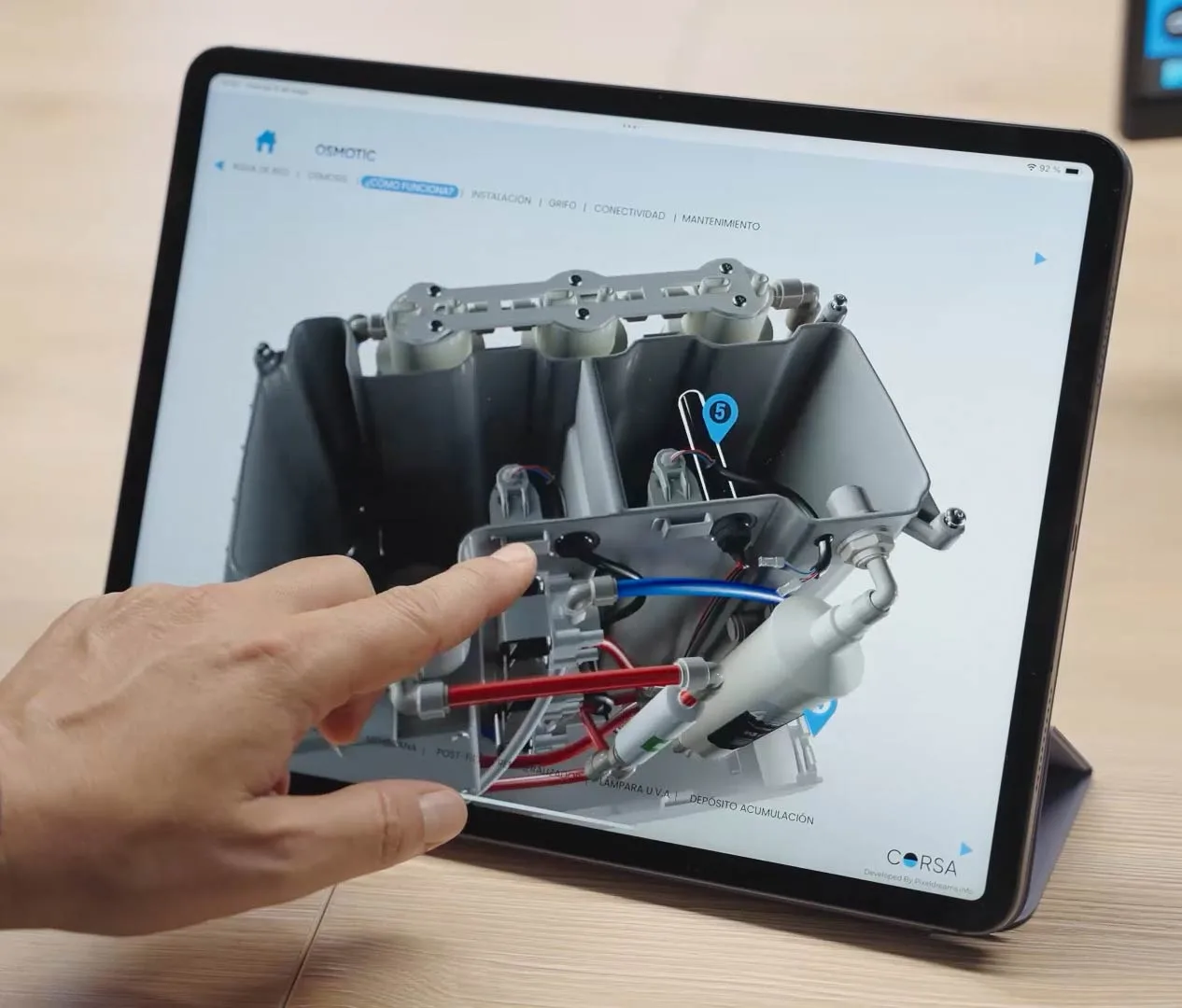
Grupo Corsa | AR sales catalog
Digital twin of the Osmotic Zero system for remote technical training and diagnostics.

Editorial Servet | Veterinary Cardiology Book
Augmented reality textbook for veterinary cardiology students with interactive 3D anatomical models.
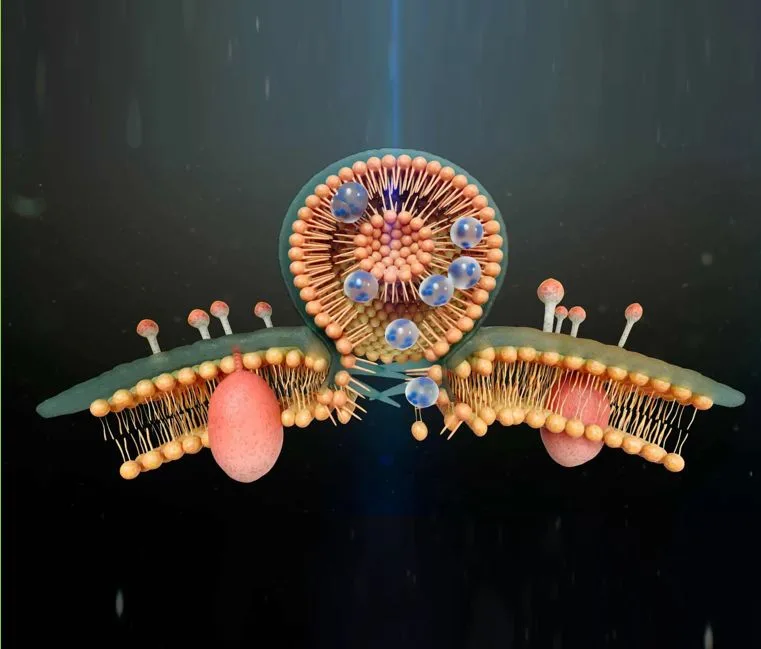
ESTEVE | Ozonest – Ophthalmologic MOA in AR
Augmented reality application for Ozonest medical representatives. Ozonest is an ophthalmic solution developed by Esteve Laboratories.
WORK PROCESS
1
Brief & kickoff
We start from your data, goals, audience, and deadline. You bring the science and the message; we tell you what is possible and how to make it land.
2
Research and scripting
We analyze objectives, define the educational or commercial approach, and develop a validated scientific script with the client.
3
Modeling and AR development
We create hyper-realistic 3D models and integrate them into augmented environments to ensure accuracy and smooth performance.
4
Technical validation
Before delivery, the experience is tested on the actual devices it will run on and validated together with design and development, so there are no surprises on the day of the congress.
5
Implementation and technical support
We assist clients with installation, configuration and use of AR applications, ensuring optimal performance.
Timelines & What to Expect
You will always know what stage you’re in, what you’re approving, and what comes next.
Timelines depend on the number of 3D models, the level of interaction, and the platforms the experience runs on.
Working against a congress or launch date? Tell us the deadline up front.
We plan the entire production backward from it
and after 25 years of trade shows and launches, we’ve hit a lot of them.
FACTORS THAT DETERMINE THE PRICE OF AN AUGMENTED REALITY HEALTHCARE PROJECT
Development complexity
Cost depends on the number of 3D models, interactions and platforms where the experience will be implemented.
Level of interactivity and usability
The more advanced the interaction or multiplatform support, the longer the development time required.
Delivery timeline
Augmented reality projects for healthcare require coordination between design, programming and validation. Development time varies depending on scope.
Source material
Existing CAD files, 3D models or technical references shorten the modelling stage. When there are none, the device is rebuilt from drawings and photographs.
How the experience is accessed
A dedicated app does not cost the same as an experience that opens in the browser from a QR code, nor does a markerless build cost the same as one that needs a printed physical marker.
Scope of installation and support
A project delivered ready to use is not the same as one that includes on-site installation, device configuration and support for the team during the event.
What this Investment Buys You:
Scientifically Accurate
Science that’s accurate and review-ready, not just pretty.
Full Ownership
Full ownership of your project and every deliverable.
Every Format, From One Partner
Every format your team needs, from one partner.
On-Deadline Delivery
A studio that hits the deadline your project is built around.
FAQS
How much does an augmented reality project for healthcare cost?
It depends on complexity, duration and level of interactivity. Each project is quoted individually.
How long does production take?
Depends on the number of elements and the technological integration needed. On average, projects are completed between 4 and 10 weeks.
What usage rights does the client receive?
Clients receive full rights for all developed content and applications.
Which devices support augmented reality healthcare applications?
Experiences can run on tablets, smartphones or AR glasses depending on the project.
Can augmented reality be combined with 3D animation or virtual reality?
Yes. Combining augmented and virtual reality in healthcare enhances learning, engagement and scientific communication.
What is augmented reality for medicine?
Augmented reality for medicine (medical AR) is a technology that overlays interactive 3D models, scientific information or simulations onto the real world through a mobile device, tablet or AR glasses. In the healthcare and pharmaceutical sector it is applied in medical training, device marketing, congresses, scientific communication and mechanism of action (MOA) presentations for healthcare professionals.
How can a pharmaceutical company use augmented reality?
Pharmaceutical companies use augmented reality to present drug mechanisms of action at medical congresses, train medical sales representatives, create innovative sales materials, visualise the molecule of an active ingredient in 3D or make their scientific communications more interactive. It is a medical marketing tool that differentiates the brand and improves retention of the clinical message.
What is the difference between augmented reality and virtual reality in medicine?
Augmented reality (AR) overlays digital elements onto the user’s real environment, while virtual reality (VR) immerses the user in a fully digital environment. In medicine, AR is ideal for applications in consultations, at trade fairs or in training where the real environment is present. VR is better suited to immersive clinical simulations, exposure therapy or complete surgical training.
What kind of medical content can be represented in augmented reality?
With augmented reality we can represent pharmacological mechanisms of action, interactive human anatomy, how medical devices work, step-by-step surgical procedures, clinical data visualisation, models of pathologies and treatment simulations. Any complex scientific concept can be turned into an AR experience that makes it easier to understand.
Can I use augmented reality at a medical congress without an internet connection?
Yes. We develop augmented reality experiences that work offline, with no internet connection required. This is especially useful at medical congresses, pharmaceutical trade fairs or hospital environments where connectivity may be limited. The 3D content is downloaded in advance and runs locally on the user’s device.
Does the user have to download an app?
It depends on how the project is set up. Some experiences run straight in the browser with nothing to install: scanning a QR code is enough. Others are built as a dedicated app, which is usual when you need to show complex equipment or work offline.
Can it be used to plan the installation of a device in a hospital?
Yes, and it is one of the most concrete uses. It lets you place the device at real scale in the space where it would go and check distances and accessibility before buying or installing anything.
Does it work for training teams on how to use a medical device?
Yes. It can project the device at full size with all its modules visible, let users virtually touch each part to discover its function, and walk through complete usage sequences without having the machine in front of them.
Can augmented reality be added to printed material?
Yes. A marker printed in a book, a leaflet or a poster triggers the 3D content when you point a phone at it. We did it with a veterinary anatomy book distributed in fifteen countries.
Can the impact of an augmented reality campaign be measured?
Yes. When the experience launches from a QR code or a link, scans, opens and time spent can be measured, just like any other digital campaign.
——— GET A QUOTE ———
Get a Quote for Your Augmented Reality Project
Tell us your project, your audience, and your deadline.
We’ll come back with a clear approach and a fixed quote, usually within 48 hours.
Contact
Contact Us
Contact
Contact Us
Boston, Massachusetts, USA
T: (+1) 617 351 8477
M: (+1) 484 473 1704
info@pixel-medical-animation.com
Business Hours:
Mon-Fri: 9am-6pm (local time)
How can we help you?

SERVICES
- Medical 3D Animation in Boston
- Medical 3D Animation in Miami
- Medical 3D Animation in Los Angeles
- Medical 3D Animation in Minneapolis
- Medical 3D Animation in New York
- Medical 3D Animation in Raleigh Durham
- Medical 3D Animation in Chicago
- Medical 3D Animation in Texas
- Medical 3D Animation in Seattle
- Medical 3D Animation in Washington DC