──── BLOG |
VR for pain management: how it is used and what it takes to build
Attention is limited. That is the whole idea behind using virtual reality during a painful procedure: an environment that demands enough attention leaves less of it available for the pain.
This guide covers where VR is used in pain management, what separates a distraction environment from a relaxing video, what can and cannot be claimed about it, and how one is produced.
Where it is used
During procedures. The best-known application: short, intense moments — a dressing change, a cannulation, a dental or dermatological intervention — where the environment runs for exactly as long as the procedure does.
Paediatrics. Children engage with an environment faster than adults and are harder to distract with words, which is why this is one of the most common settings.
Anxiety around pain. Often the thing being treated is not the pain itself but the dread before it, which is where our Pharma VR work on humanising hospital care sits.
As part of a programme. In chronic pain, VR is one component of a plan the clinical team owns, not a treatment on its own.
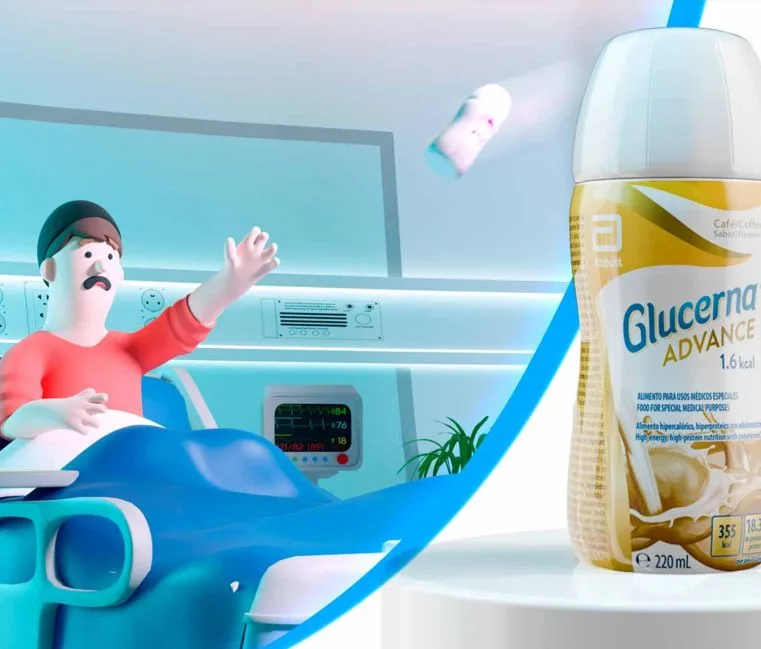

What makes a distraction environment work
It demands something. A passive landscape is pleasant; an environment that asks the patient to look, follow or do something holds attention. The difference between the two is the whole project.
It matches the length of the procedure. Not longer, not shorter. An environment that ends before the procedure does is worse than none.
It does not induce discomfort. Movement, sudden camera changes and fast transitions can cause nausea, and a patient already in pain has no tolerance for that. Comfort testing is not a nice-to-have.
Someone can stop it in a second. The control stays with the clinician, always.
What can and cannot be claimed
We build the experiences; we do not make clinical claims. Whether a given environment reduces pain, for whom and by how much is a question for the clinical team and the evidence behind their protocol.
Our own work in this area is Terapy VR, applied to pain and anxiety. What we bring is the production side: the environment, the interaction, the comfort and the application that runs it.
And the limit is worth stating plainly: VR does not replace analgesia or any treatment. It is used alongside, under a protocol.


How one is produced
The sequence is the same as in any therapeutic VR project: the protocol first, then the environment, then the interaction, with clinical review at script and at first build rather than at the end.
Two decisions shape the budget more than the 3D does. The hardware — a standalone headset keeps it usable on a ward; anything needing a computer changes where it can go. And hygiene and logistics — who cleans the headset, who charges it, who sets it up between patients. A project that ignores those produces an experience nobody uses twice.
When something simpler is better
When the procedure lasts seconds. The setup time costs more attention than it buys.
When the patient cannot wear a headset, which is more common than briefs assume.
And when what is needed is information rather than distraction — then a patient education animation does the job better and reaches everyone.

MORE GUIDES

What Is VR Therapy? Uses, Limits and How One Is Built
3D Body and Face Scanning for Medical Projects: When It Is Worth It
Digital Human and Avatar Technology: How One Is Actually Built
What Is a Digital Human? Uses in Healthcare and Pharma
Virtual Reality in Psychology: What Is Used and What It Takes to Build
What Is a Virtual Patient? Uses in Medical Training
Scientific Infographic Examples for Research and Pharma

Augmented Reality in Surgery: Use Cases Today

VR Surgical Training: How It Works and What It Costs

Virtual Reality in Surgery: Training, Planning and the Future
Contact
Contact Us
Contact
Contact Us
Boston, Massachusetts, USA
T: (+1) 617 351 8477
M: (+1) 484 473 1704
info@pixel-medical-animation.com
Business Hours:
Mon-Fri: 9am-6pm (local time)
How can we help you?

SERVICES
- Medical 3D Animation in Boston
- Medical 3D Animation in Miami
- Medical 3D Animation in Los Angeles
- Medical 3D Animation in Minneapolis
- Medical 3D Animation in New York
- Medical 3D Animation in Raleigh Durham
- Medical 3D Animation in Chicago
- Medical 3D Animation in Texas
- Medical 3D Animation in Seattle
- Medical 3D Animation in Washington DC