──── BLOG |
Virtual reality in surgery: training, planning and the future
Virtual reality in surgery covers four jobs that have very little to do with each other: teaching a procedure, rehearsing a specific case, explaining an operation to the person who will undergo it, and presenting a technique to other surgeons.
They need different budgets, different hardware and different people signing off on the content. This guide separates them, shows what we have built in each, and says where the technology is still a demo rather than a tool.
Teaching a procedure
The most established use. A surgeon in training follows a procedure step by step in an environment that can be paused, reversed and repeated, which is exactly what an operating theatre cannot offer.
What makes it work is not visual fidelity but sequence: the order of steps, the decision points and what happens when a step is taken out of turn. An environment with beautiful tissue and no sequence teaches nothing. This is the core of what we cover on the surgical simulation and VR training page.

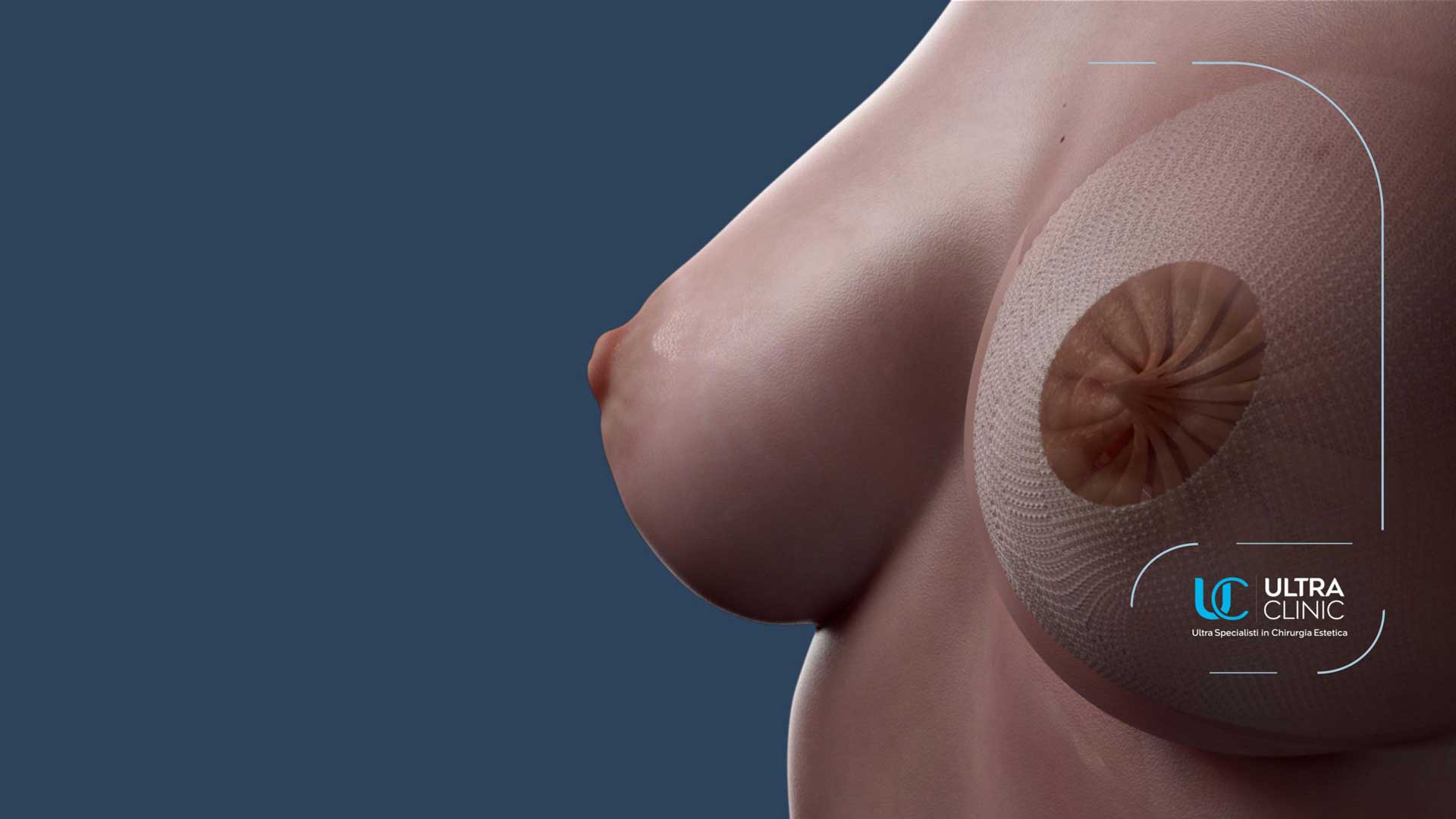
Presenting a technique to other surgeons
This is where most of our surgical work lives, and it is worth being clear that it is 3D animation rather than interactive VR. For Clinica Jordi Mir we animated surgical and clinical procedures in 3D, including work presented at the Renuvion Summit, and for Dr. Buccheri we produced the anatomical visualization behind the Inner Bra mastopexy technique.
A congress audience is a room of people who already know the anatomy. What they want is the manoeuvre, from an angle a camera in theatre cannot reach — which is precisely what 3D buys.
Explaining an operation to a patient
A different audience and a different brief. Here the goal is informed consent and lowered anxiety, which means less detail rather than more, and an explicit decision about how much is shown.
Our virtual reality work in a clinical setting was built to humanize hospital care rather than to train anyone, and the design rules are almost the opposite of the training case: short sessions, no failure states, nothing that can be misread as a complication.


Letting the viewer move through the anatomy
Between a video and a full simulator sits the interactive application: the viewer rotates, cuts and isolates structures at their own pace. We built one for Boehringer Ingelheim as a 3D anatomy application, and the same pattern applies to surgical anatomy.
It is the most reusable format in this list. It runs without a headset, it works on a stand and in a meeting, and it does not go out of date when the hardware does.
What virtual reality in surgery does not do yet
It does not replace cadaveric or supervised practice, and anyone claiming otherwise is describing a product that does not exist. Haptics — the sense of resistance when tissue is cut — remains the hard limit, and without it a simulator trains sequence and decision, not technique.
Headset logistics are the other honest constraint: devices to charge, clean, update and supervise. A VR module with nobody to run it becomes a cupboard full of hardware within a year.


Where it is going
Three directions look solid rather than speculative. Standalone headsets keep removing the room-and-sensors problem, which is what has kept simulation inside laboratories. Case-specific rehearsal from a patient scan is moving from research into practice for a narrow set of procedures. And the content itself is converging: the same 3D assets feed the animation, the interactive application and the VR module.
That last point is the one with budget consequences. Built properly once, the anatomy pays for itself across three outputs. See virtual reality for healthcare and pharma.
MORE GUIDES
VR for Pain Management: How It Is Used and What It Takes to Build
What Is VR Therapy? Uses, Limits and How One Is Built

3D Body and Face Scanning for Medical Projects: When It Is Worth It
Digital Human and Avatar Technology: How One Is Actually Built
What Is a Digital Human? Uses in Healthcare and Pharma
Virtual Reality in Psychology: What Is Used and What It Takes to Build
What Is a Virtual Patient? Uses in Medical Training

Scientific Infographic Examples for Research and Pharma

Augmented Reality in Surgery: Use Cases Today

VR Surgical Training: How It Works and What It Costs
Contact
Contact Us
Contact
Contact Us
Boston, Massachusetts, USA
T: (+1) 617 351 8477
M: (+1) 484 473 1704
info@pixel-medical-animation.com
Business Hours:
Mon-Fri: 9am-6pm (local time)
How can we help you?

SERVICES
- Medical 3D Animation in Boston
- Medical 3D Animation in Miami
- Medical 3D Animation in Los Angeles
- Medical 3D Animation in Minneapolis
- Medical 3D Animation in New York
- Medical 3D Animation in Raleigh Durham
- Medical 3D Animation in Chicago
- Medical 3D Animation in Texas
- Medical 3D Animation in Seattle
- Medical 3D Animation in Washington DC