──── BLOG |
Medical Device Video Production: A Practical Guide
A medical device video has a job most product films do not: it has to show what happens inside a closed object, in a body, at a scale and a speed no camera reaches. That single constraint decides almost everything about how it is made.
This guide covers why a device film is not a product film, what has to be shown, how regulated claims change the production, what sets the budget, and where the same build gets reused afterwards.
Why a device film is not a product film
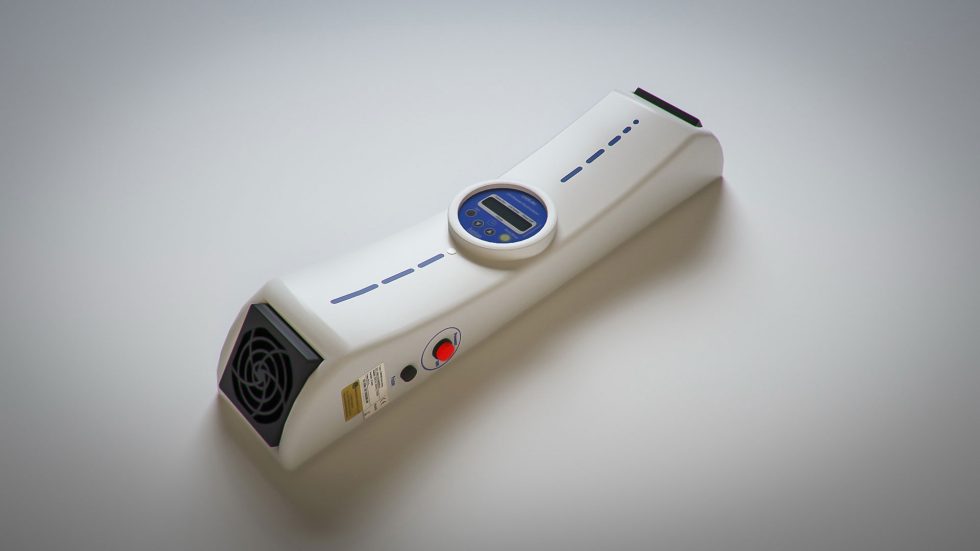
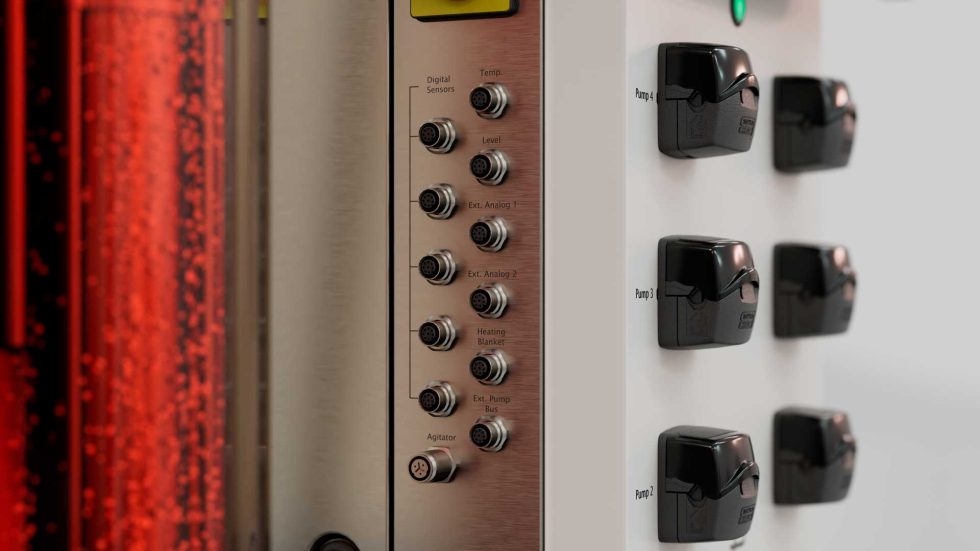
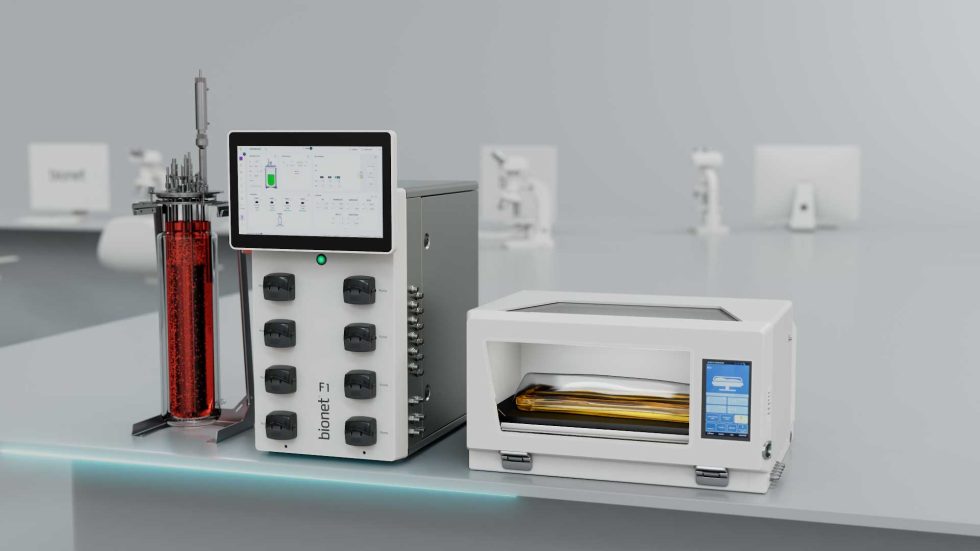
A product photograph shows the finished device. It does not show what happens inside it, how it is used, or why the engineering matters. With equipment like Bionet’s F1 bioreactor — a closed unit for fermentation and industrial bioprocesses — everything worth buying happens where you cannot see it.
3D removes that wall. The device can be rotated, sectioned, slowed down, or shown twice from two angles. More importantly, it can be shown working before a physical unit exists, which is why so many device animations are commissioned ahead of launch.


What usually has to be shown
Three things, in this order. Where the device sits — in a theatre, on a bench, in a hospital’s plant room. What it does, as a sequence rather than a feature list. And the one thing that distinguishes it from the alternative the buyer is also considering.
For Corsa, which makes water purification systems for hospitals and clinics, that third element was maintenance: we built a digital twin of the Osmotic line that explains every component, so the same application sells to clients and trains the technicians who replace the filters.
Regulated claims change the production, not just the copy
Anything the animation shows is a claim, including the things it implies. If a sequence suggests a speed, an outcome or a comparison, someone will read it that way.
So the script is approved before the storyboard, and the storyboard before the modelling. Two scheduled review rounds — one at storyboard, one before final render — is the normal shape. Discovering the review at the end is the single most expensive way to run a device project.
The practical decisions that set the budget
Whether you have usable CAD files. How many internal mechanisms have to be modelled rather than shown from outside. How many scenes the piece contains, which matters more than its running time. And the format.
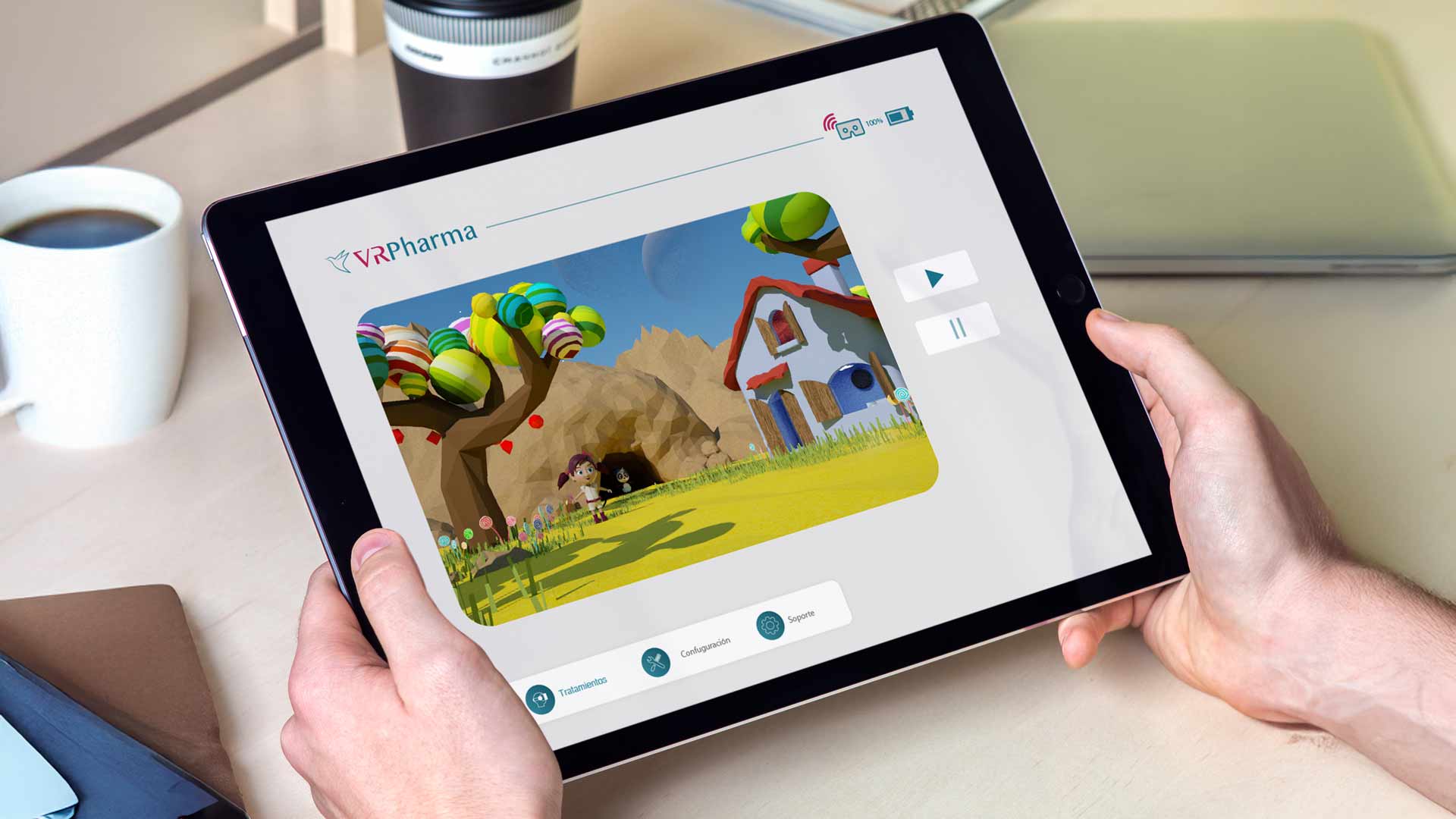
Format is where device projects differ most from pharma ones. A sales film is linear. A training piece is often interactive or in augmented reality, because the alternative is shipping hardware to every session — which is exactly the problem Werfen set out to solve when it turned its training into an immersive, collaborative experience.
Where the same build gets used again
Trade shows, the sales team’s tablet, the product page, onboarding and technical training, and the regulatory or tender dossier. The model is the expensive part; once it exists, each of those is a cut rather than a production.
Which is why the deliverables list belongs in the first conversation. Agreed up front, four uses cost barely more than one. Agreed afterwards, each is a small project of its own.
MORE GUIDES
VR for Pain Management: How It Is Used and What It Takes to Build
What Is VR Therapy? Uses, Limits and How One Is Built
3D Body and Face Scanning for Medical Projects: When It Is Worth It
Digital Human and Avatar Technology: How One Is Actually Built
What Is a Digital Human? Uses in Healthcare and Pharma
Virtual Reality in Psychology: What Is Used and What It Takes to Build
What Is a Virtual Patient? Uses in Medical Training
Scientific Infographic Examples for Research and Pharma
Augmented Reality in Surgery: Use Cases Today

VR Surgical Training: How It Works and What It Costs
Contact
Contact Us
Contact
Contact Us
Boston, Massachusetts, USA
T: (+1) 617 351 8477
M: (+1) 484 473 1704
info@pixel-medical-animation.com
Business Hours:
Mon-Fri: 9am-6pm (local time)
How can we help you?

SERVICES
- Medical 3D Animation in Boston
- Medical 3D Animation in Miami
- Medical 3D Animation in Los Angeles
- Medical 3D Animation in Minneapolis
- Medical 3D Animation in New York
- Medical 3D Animation in Raleigh Durham
- Medical 3D Animation in Chicago
- Medical 3D Animation in Texas
- Medical 3D Animation in Seattle
- Medical 3D Animation in Washington DC