──── BLOG |
MOA Animation Examples That Stay in the Room
Most mechanism of action animations are forgotten by the time the delegate reaches the next stand. The ones that are not have something in common, and it is not the rendering budget.
These are mechanisms we have built, each one in a different format — linear film, augmented reality, interactive experience — with a note on why that format was the right one. Every example links to its project page so you can judge the finished piece rather than the description.
Salvat — UVESOL, a mechanism built for a stand at CPHI
Laboratorios Salvat, founded in 1955 and based in Barcelona, researches and develops ophthalmic and ENT products. For CPHI 2023 the brief was to show how UVESOL acts on the ocular surface.
A congress stand is the hardest place to explain anything: the viewer is standing, distracted, and may give you forty seconds. So the piece was cut to one mechanism, shown once, at the scale where it happens, with a closing frame that carries the claim on its own in case the delegate only sees the end.
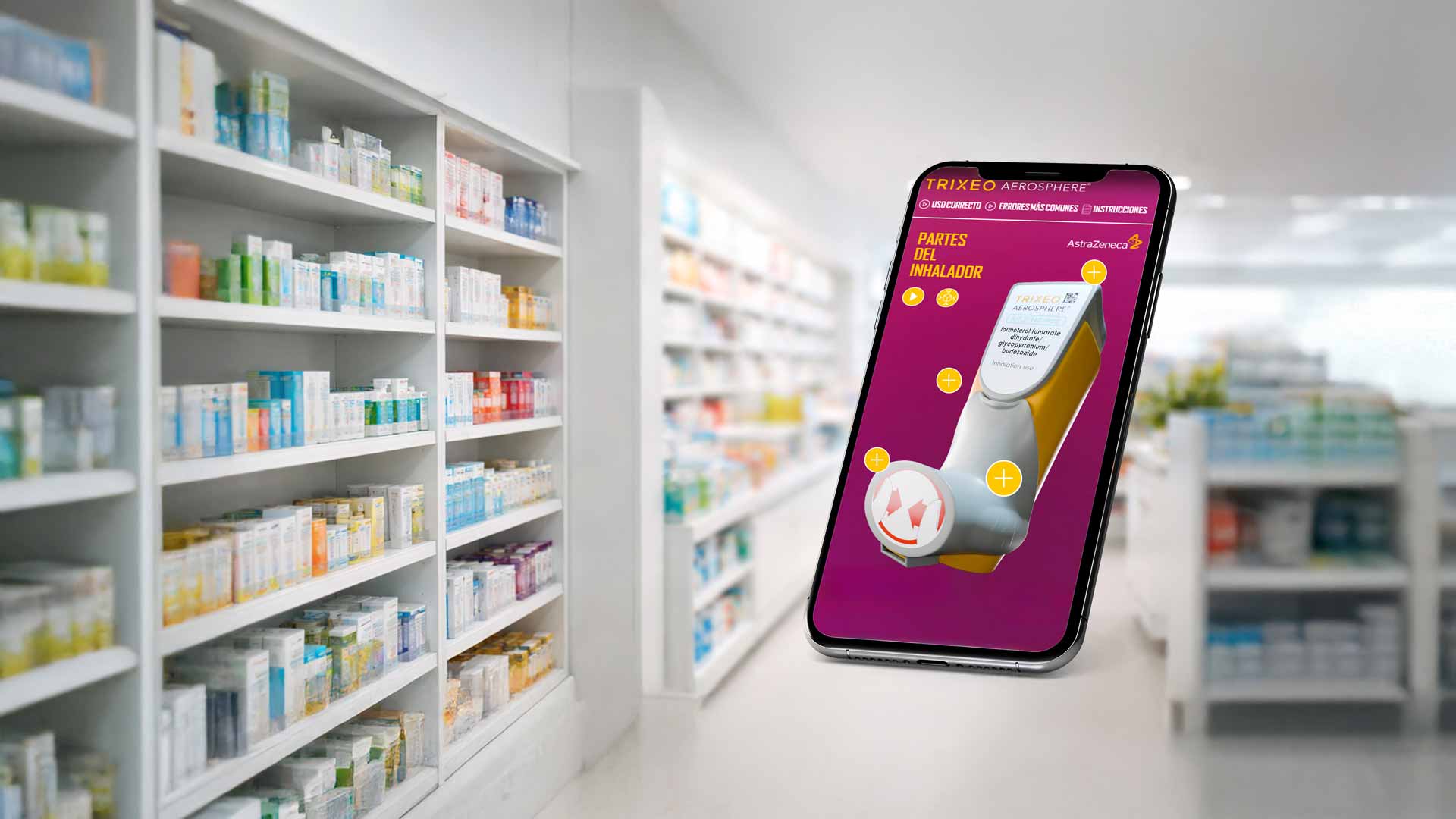

Novartis — psoriasis seen from inside the skin, in augmented reality
For Novartis we built an augmented reality experience that shows the inflammatory process of psoriasis over the real surface in front of the user, layer by layer.
Augmented reality is worth the extra build when the comparison is with something physically present. A dermatologist looking at skin, with the mechanism overlaid on the same plane, is a different conversation from the same mechanism on a laptop across the desk.
Esteve — Ozonest, a mechanism that travels with the delegate
Ozonest is an ophthalmic solution from Esteve Laboratorios, based in Barcelona, for protecting, lubricating, hydrating and soothing the ocular surface, with LipozonEye® in its formula.
Here the mechanism did not stay at the stand: we built an augmented reality application for the delegates who present it. That is the version that survives the congress — it works in a consulting room, on a tablet, with one hand free, months after the event.

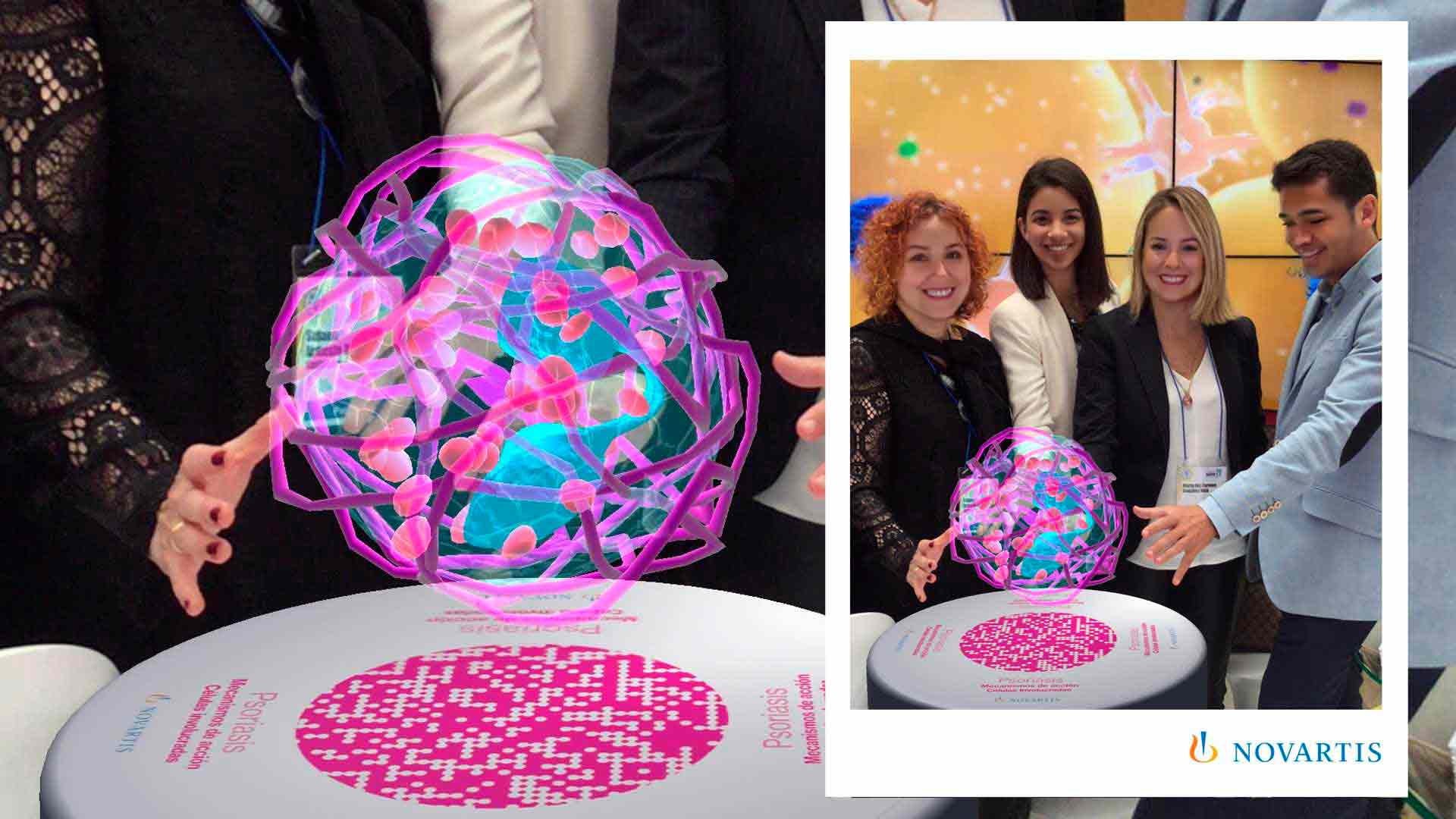
Evidenze and BioCryst — hereditary angioedema as an interactive experience
Some mechanisms are not a single sequence but a set of branches the audience has to explore. For Evidenze and BioCryst we built a 3D interactive experience around hereditary angioedema for a pharma congress.
Interactive is the right shape when the specialist wants to go to the part that matters to their patients, rather than watch six minutes hoping their question comes up. It costs more to build and it holds attention much longer.
What the ones that are remembered have in common
One mechanism per piece. A single establishing shot so the viewer knows where in the body they are. A consequence shot that comes back to the tissue or the patient, because that is what the audience actually cares about. And a final frame that works on its own.
And, invisible from outside: a reviewer. In every one of these, someone qualified on the client’s side confirmed that what the animation shows is what happens. That is the step that makes an MOA usable in a regulated market, and it belongs in the schedule from the start.
MORE GUIDES
VR for Pain Management: How It Is Used and What It Takes to Build
What Is VR Therapy? Uses, Limits and How One Is Built
3D Body and Face Scanning for Medical Projects: When It Is Worth It
Digital Human and Avatar Technology: How One Is Actually Built
What Is a Digital Human? Uses in Healthcare and Pharma
Virtual Reality in Psychology: What Is Used and What It Takes to Build
What Is a Virtual Patient? Uses in Medical Training
Scientific Infographic Examples for Research and Pharma

Augmented Reality in Surgery: Use Cases Today

VR Surgical Training: How It Works and What It Costs
Contact
Contact Us
Contact
Contact Us
Boston, Massachusetts, USA
T: (+1) 617 351 8477
M: (+1) 484 473 1704
info@pixel-medical-animation.com
Business Hours:
Mon-Fri: 9am-6pm (local time)
How can we help you?

SERVICES
- Medical 3D Animation in Boston
- Medical 3D Animation in Miami
- Medical 3D Animation in Los Angeles
- Medical 3D Animation in Minneapolis
- Medical 3D Animation in New York
- Medical 3D Animation in Raleigh Durham
- Medical 3D Animation in Chicago
- Medical 3D Animation in Texas
- Medical 3D Animation in Seattle
- Medical 3D Animation in Washington DC