──── BLOG |
What Is Medical Animation? A Complete Guide
Medical animation is 3D visualization used to explain science that cannot be filmed: a molecule binding, a device working inside the body, a surgical step, a process at cellular scale. It is produced the same way as any 3D animation — modelling, animation, lighting, render — but it answers to a reviewer who can say that something is scientifically wrong.
This guide covers what it is, the formats it comes in, who commissions it and why, how a project actually runs, what moves the cost, and how to judge whether a piece is any good. The examples are our own projects, linked so you can see them.
What medical animation actually is
At its simplest: a 3D scene built so that something invisible becomes legible. The anatomy, the molecule or the device is modelled; the process is animated as a sequence of states; the camera and the lighting are chosen to make the sequence readable rather than to look impressive.
What separates it from general 3D is the constraint. A product film can cheat scale, colour and timing for effect. A medical animation cannot, because the audience includes people who know what the structure really looks like and what order the events really happen in. The moment a clinician spots something impossible, the whole piece loses its authority.
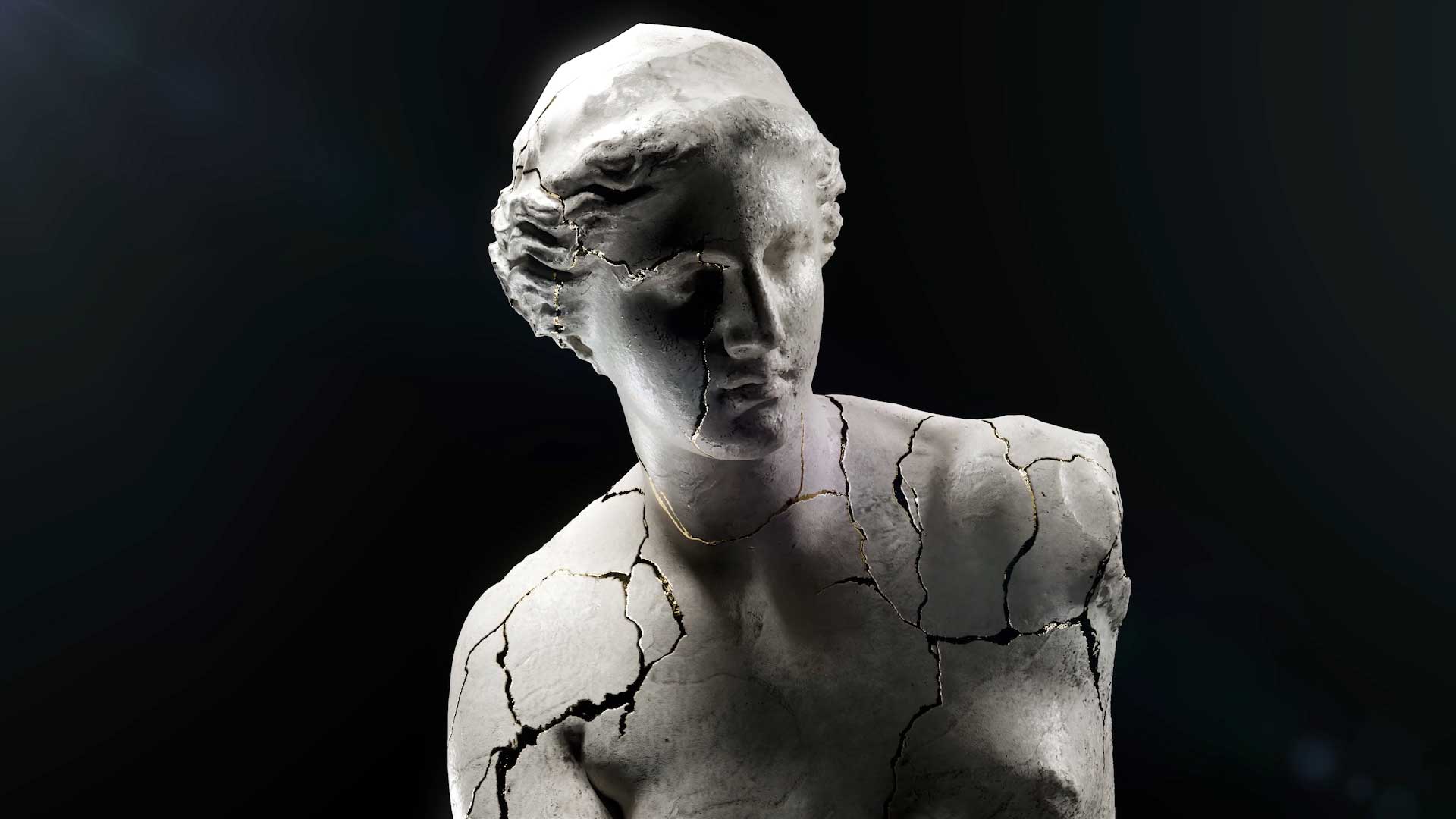
That is why the scientific review is part of the production and not a box ticked at the end. The 3D medical illustration we built for Dr. Stefan Danila’s TED talk went through exactly that loop before anything was rendered.

The main types of medical animation, and what each one is for
Linear animation is the default: a film with a fixed running order, for a congress screen, a web page or a sales meeting. Interactive 3D lets the viewer drive — useful when a specialist wants to go straight to the part that concerns their patients.
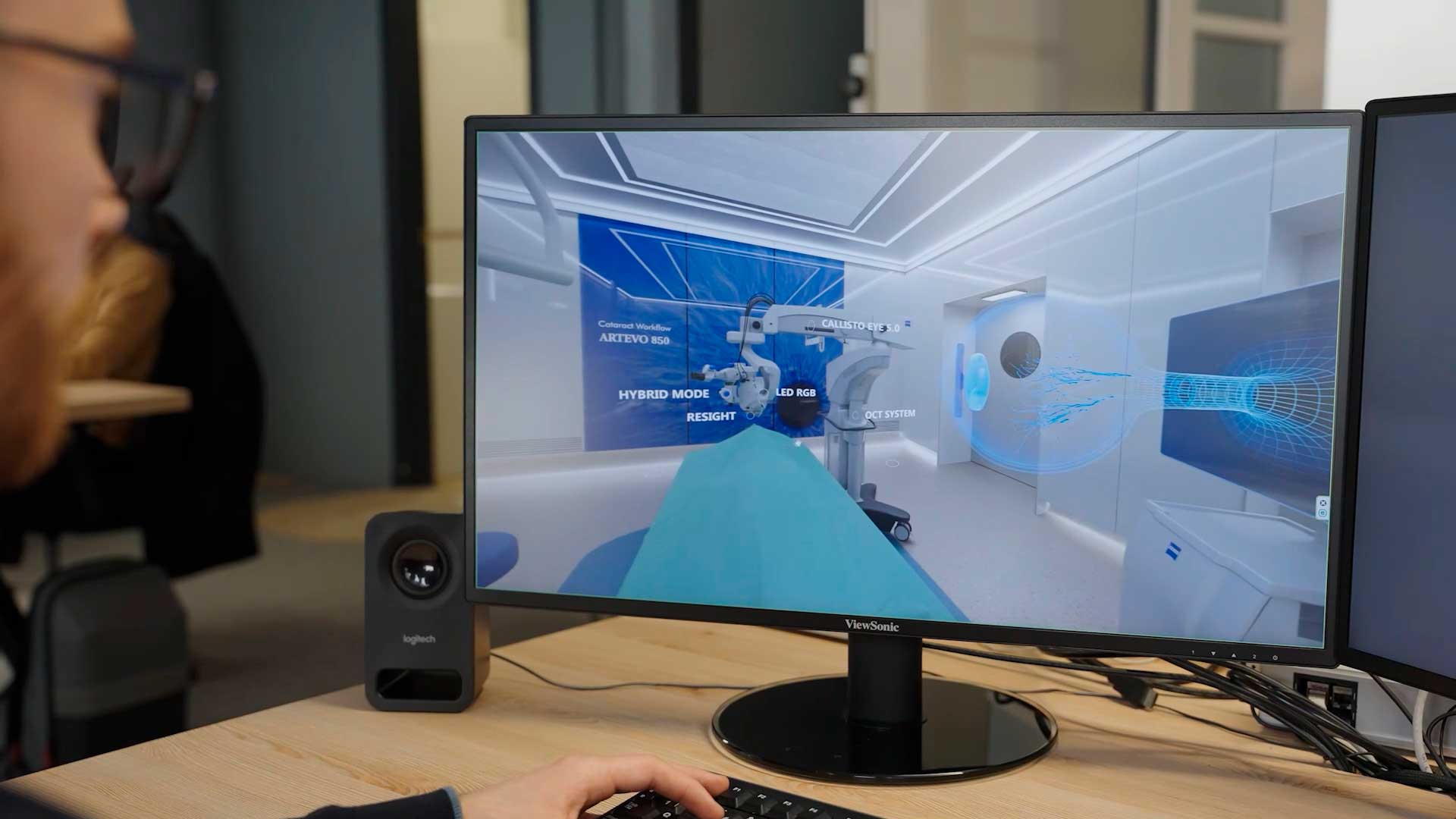
Augmented reality overlays the 3D on the real world, which earns its cost when the comparison is with something physically present: a device on a table, a page in a book, skin in front of a dermatologist. Virtual reality puts the viewer inside the scene, and is worth it when presence itself is the point — a space, a procedure, a showroom like the medical metaverse we built for Zeiss Medical Technology.
And stills: a scientific illustration from the same scene, for a poster, a paper or packaging. Most projects end up using more than one of these from a single build.
Who commissions it, and what they are trying to do
Pharmaceutical companies, to explain a mechanism of action — the part of a product story that a competitor cannot copy and a slide cannot carry. Medical device and medtech manufacturers, to open up a product that is closed, or to show it in a body where no camera fits.
Hospitals, clinics and individual surgeons, to explain a technique to colleagues or a procedure to patients. Biotech and research groups, to communicate a process that so far only exists in data. And increasingly, companies that need to train people on equipment without shipping the equipment — which is what we built for Werfen in augmented reality.
The common thread is not the sector. It is that someone has to understand something they cannot see, and words are not getting them there.


How a project actually runs
It starts in writing, not in 3D. The first deliverable is a script or a sequence of events that fixes what the piece claims, in plain language, so that the science can be argued about before anything expensive exists.
Then a storyboard fixes the shots, and that is the first real review point. Modelling and animation follow, with a second review before the final render. Sound, voiceover and language versions come last, because they are the cheapest things to change.
When a project slips, the cause is almost always that review was treated as an approval at the end rather than as two scheduled steps in the middle. We budget the rounds explicitly for exactly that reason.
What moves the cost
Four things, roughly in order. How much has to be modelled from scratch — an existing CAD file or anatomy library is not the same starting point as a structure nobody has built. How long the piece is, and how many distinct scenes it contains.
How many review rounds the science needs, which depends on how regulated the claim is. And the deliverables list: a congress cut, a web cut, subtitles in four languages and a set of stills share most of the work, but only if the list is agreed before production rather than after it.
We set this out in detail in what actually moves the cost, including what a real quotation should contain.


How to tell a good medical animation from an expensive one
Ask what it claims, and whether it claims one thing. A piece that explains three mechanisms explains none. Ask whether you can tell where in the body you are within the first few seconds. Ask whether the ending works on its own, because a large share of the audience will only see the end.
Then ask the awkward question: who signed off the science? A beautiful animation that no qualified person has reviewed is a liability in a regulated market, however good it looks in a reel.
MORE GUIDES

VR for Pain Management: How It Is Used and What It Takes to Build
What Is VR Therapy? Uses, Limits and How One Is Built
3D Body and Face Scanning for Medical Projects: When It Is Worth It
Digital Human and Avatar Technology: How One Is Actually Built
What Is a Digital Human? Uses in Healthcare and Pharma
Virtual Reality in Psychology: What Is Used and What It Takes to Build
What Is a Virtual Patient? Uses in Medical Training
Scientific Infographic Examples for Research and Pharma

Augmented Reality in Surgery: Use Cases Today

VR Surgical Training: How It Works and What It Costs
Contact
Contact Us
Contact
Contact Us
Boston, Massachusetts, USA
T: (+1) 617 351 8477
M: (+1) 484 473 1704
info@pixel-medical-animation.com
Business Hours:
Mon-Fri: 9am-6pm (local time)
How can we help you?

SERVICES
- Medical 3D Animation in Boston
- Medical 3D Animation in Miami
- Medical 3D Animation in Los Angeles
- Medical 3D Animation in Minneapolis
- Medical 3D Animation in New York
- Medical 3D Animation in Raleigh Durham
- Medical 3D Animation in Chicago
- Medical 3D Animation in Texas
- Medical 3D Animation in Seattle
- Medical 3D Animation in Washington DC